


After William Adolphus Knell – HMS Geyser off Mount Edgcumbe
Couldn't load pickup availability
Description
After William Adolphus Knell (1802–1875) - H.M. Steam Frigate Geyser off Mount Edgcumbe, 1856
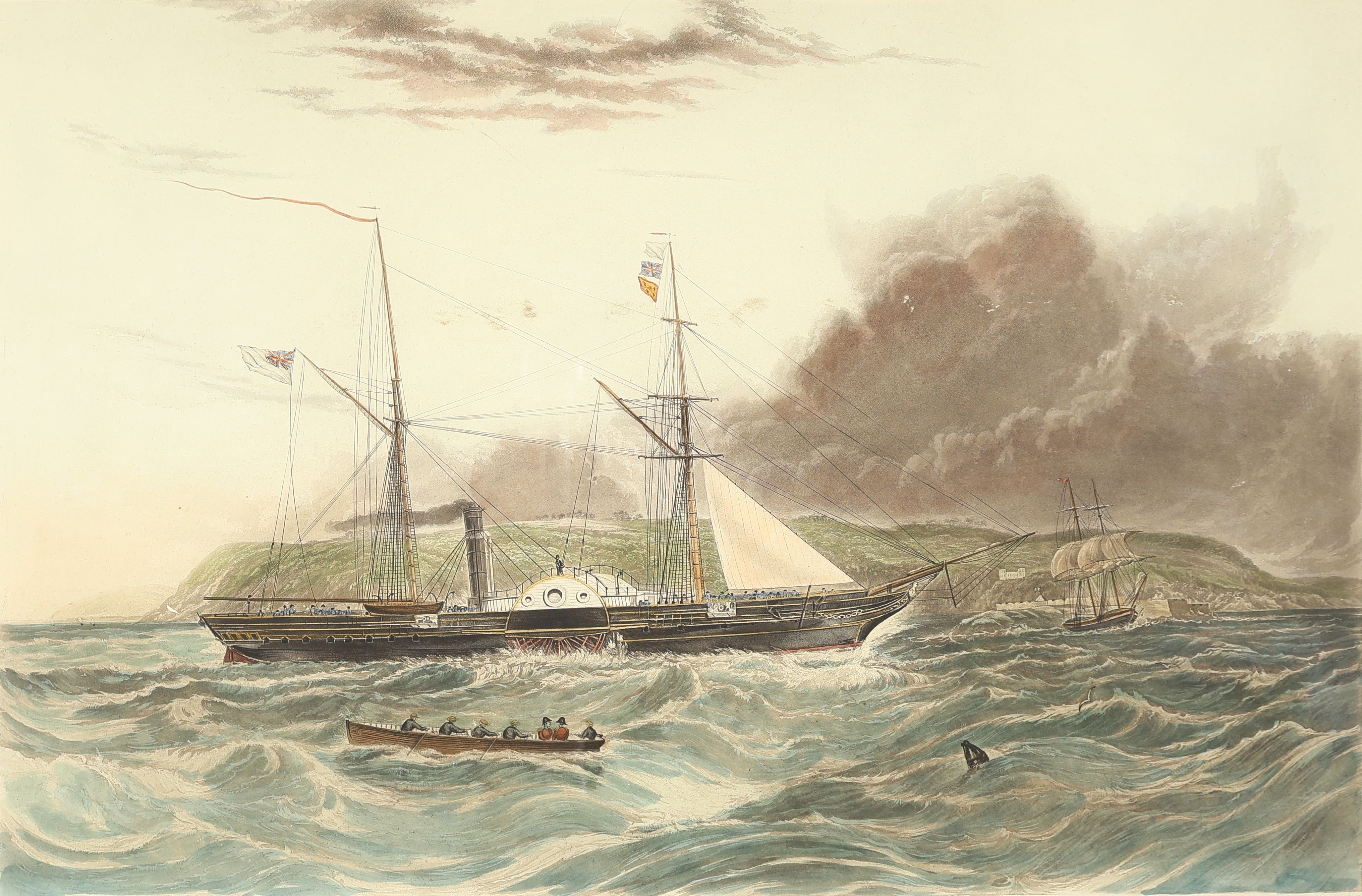
A finely detailed hand-coloured aquatint and etching after the celebrated British marine painter William Adolphus Knell (1802–1875), engraved by Charles Hunt (1803–1877) and published by Ackermann & Co. of 96 Strand, London, on 1 November 1856. Titled beneath the image This View of H.M. Steam Frigate “Geyser”, when off Mt. Edgecombe, the print depicts the early Royal Navy paddle steamer HMS Geyser underway in Plymouth Sound, with Mount Edgcumbe rising behind.
The powerful steam frigate dominates the composition, shown broadside as she drives through a choppy sea beneath both steam and sail. Her large paddle wheel, funnel, guns, masts and intricate rigging are rendered in remarkable detail, while a naval cutter carrying several figures crosses the turbulent foreground. A smaller sailing vessel appears beyond at the right, with the wooded slopes and buildings of Mount Edgcumbe providing a distinctly identifiable backdrop.
Of particular interest is the extensive engraved information beneath the image. Alongside the title and dedication to Sir John Barrow, then associated with the Admiralty, the plate records Geyser's principal dimensions, armament and complement of 128 men, together with the statement that she was built to the plans of the influential naval surveyor Sir William Symonds and fitted with 280-horsepower engines by Messrs Seaward. The print therefore functions not only as an impressive marine view but also as a detailed contemporary record of one of the Royal Navy's early steam warships.
HMS Geyser was launched at Pembroke Dockyard in 1841 during a transformative period in naval history, when steam propulsion was beginning to operate alongside traditional sail power. She subsequently enjoyed a wide-ranging career that included service in the Mediterranean, Atlantic and African waters and later participated in operations during the Crimean War, including the Baltic campaign.
The composition was first issued in 1841 and was subsequently republished by Ackermann & Co. in 1856, the present example carrying the later publication line “London: Published Novr 1st 1856, by Ackermann & Co. 96 Strand.” The continued presence of the original dedication and technical inscriptions makes the print an especially interesting example of a Victorian naval plate being returned to publication fifteen years after its first appearance, at a time when Geyser had once again become an active and newsworthy naval vessel.
Individual impressions of the print display notable variations in their hand colouring. Examples held in institutional and auction collections are known with differently coloured naval ensigns, while the present impression has the Union canton coloured against a largely white field. Such variation reflects the individually applied nature of the watercolour rather than a mechanically standardised colour scheme and gives each surviving impression a slightly different character.
William Adolphus Knell was one of the leading British marine painters of the 19th century and became particularly admired for dramatic depictions of shipping and naval subjects. His work entered important public and royal collections, including the Royal Collection and the National Maritime Museum. Charles Hunt was an accomplished engraver and aquatint specialist whose technique was particularly well suited to reproducing the atmospheric sea and sky effects of Knell's paintings. Ackermann & Co., meanwhile, was among the most important London publishers of high-quality coloured prints during the first half of the 19th century.
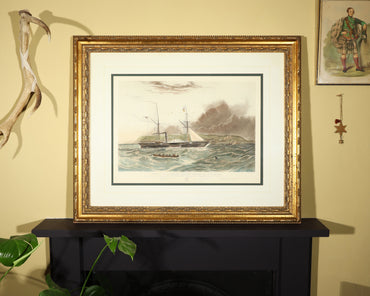
The present example survives in notably attractive condition, with strong, delicate colouring and very little visible foxing across the image. Fine details throughout the rigging, figures, waves and ship remain crisp and well defined. It is presented behind glass with a wide mount in an impressive ornate gilt frame, giving the work considerable decorative presence. The reverse has been more recently backed and fitted with modern hanging hardware.
A particularly handsome example of Victorian naval printmaking, combining the work of an important marine artist and engraver with the history of one of the Royal Navy's pioneering steam-powered warships. Its unusually clean condition, expansive original inscriptions and imposing gilt presentation make it especially appealing both as a maritime historical object and as a decorative 19th-century marine picture.
Artist: After William Adolphus Knell (1802–1875)
Engraver: Charles Hunt (1803–1877)
Title: This View of H.M. Steam Frigate “Geyser”, when off Mt. Edgecombe
Date: Published 1 November 1856
Publisher: Ackermann & Co., 96 Strand, London
Medium: Hand-coloured aquatint and etching on paper
Subject: HMS Geyser off Mount Edgcumbe, Plymouth Sound
Artwork size: 46cm x 63cm
Framed size: 82cm x 99cm
Condition: Very good antique condition overall. The print displays remarkably little visible foxing or staining for its age, with strong colour and crisp engraved detail. Some light age-related toning may be present. The ornate gilt frame shows expected minor surface wear, rubbing and small losses consistent with age. The work has been more recently backed and fitted with modern hanging hardware.


New Arrivals
-


Evelyne Oughtred Buchanan – Twilight, Edinburgh
£395.00£395.00 -
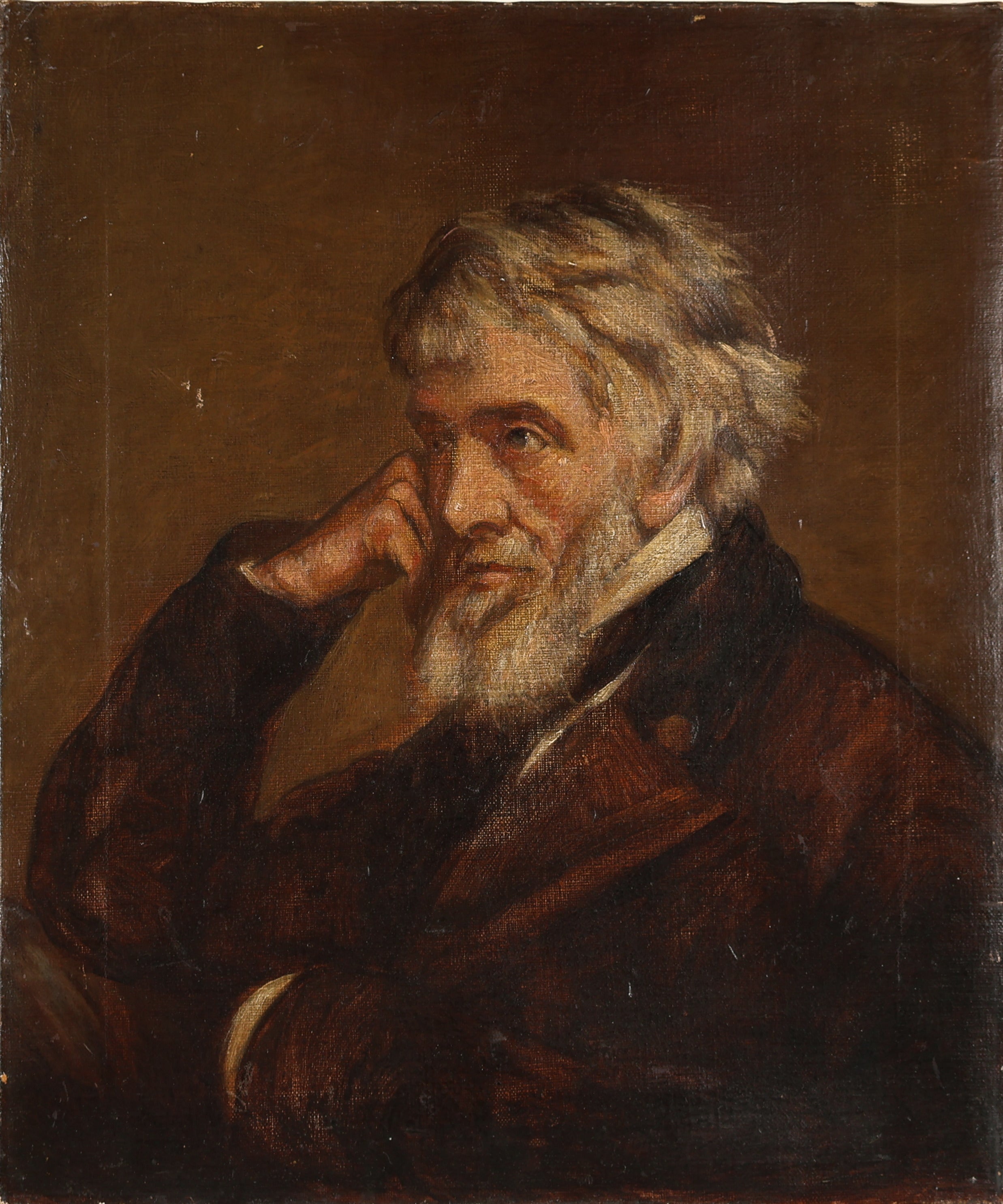
Portrait of Thomas Carlyle
£295.00£295.00 -


Ronald A. H. Craig – Still Life with Plant & Yellow Cloth
£295.00£295.00 -
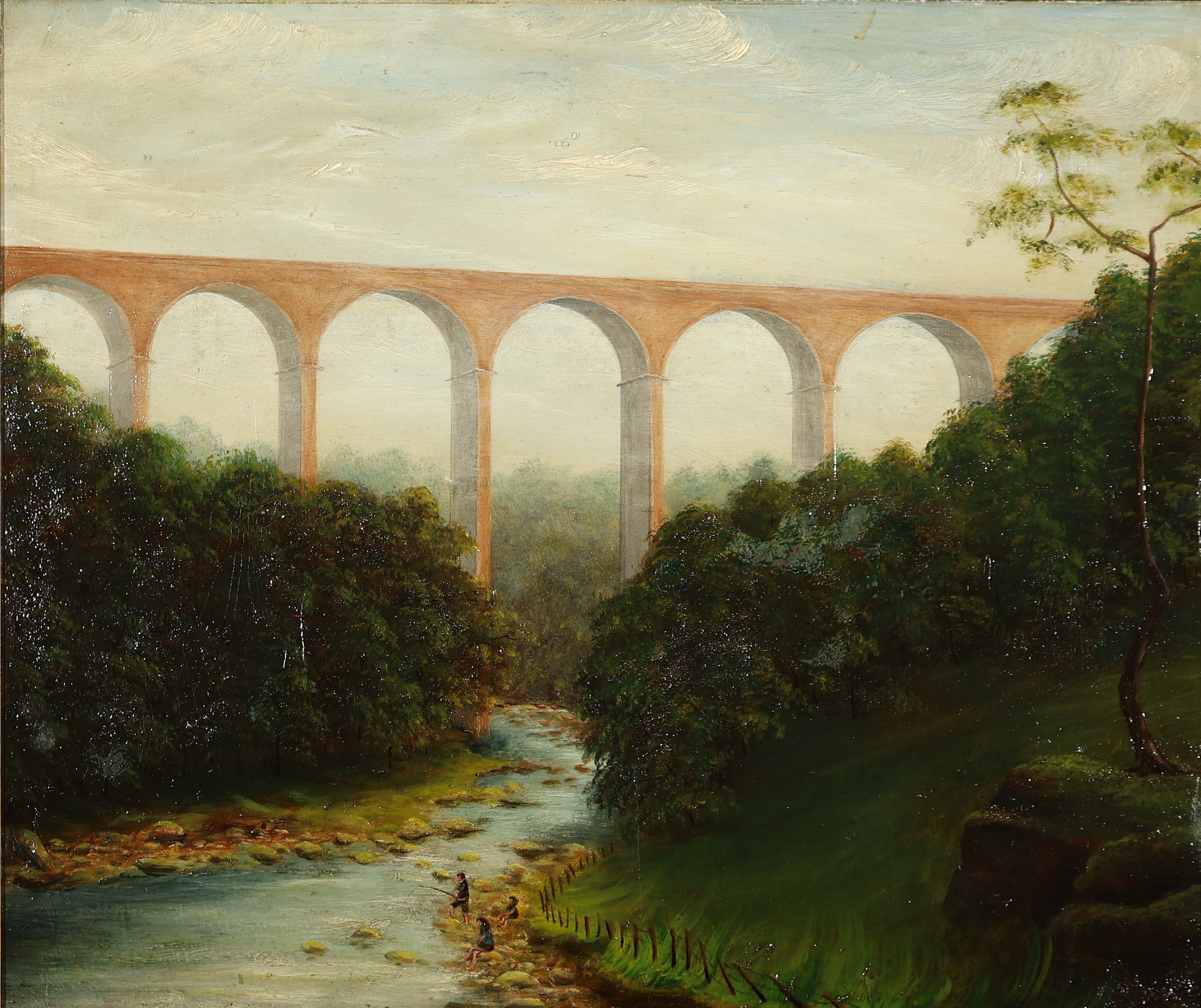
Templand Viaduct, Cumnock
£695.00£695.00 -
After William Adolphus Knell – HMS Geyser off Mount Edgcumbe
£395.00£395.00
