


Portrait of Thomas Carlyle
Couldn't load pickup availability
Description
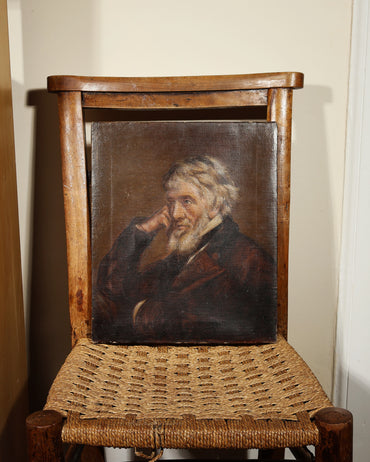
Scottish School (Early 20th Century) - Portrait of Thomas Carlyle
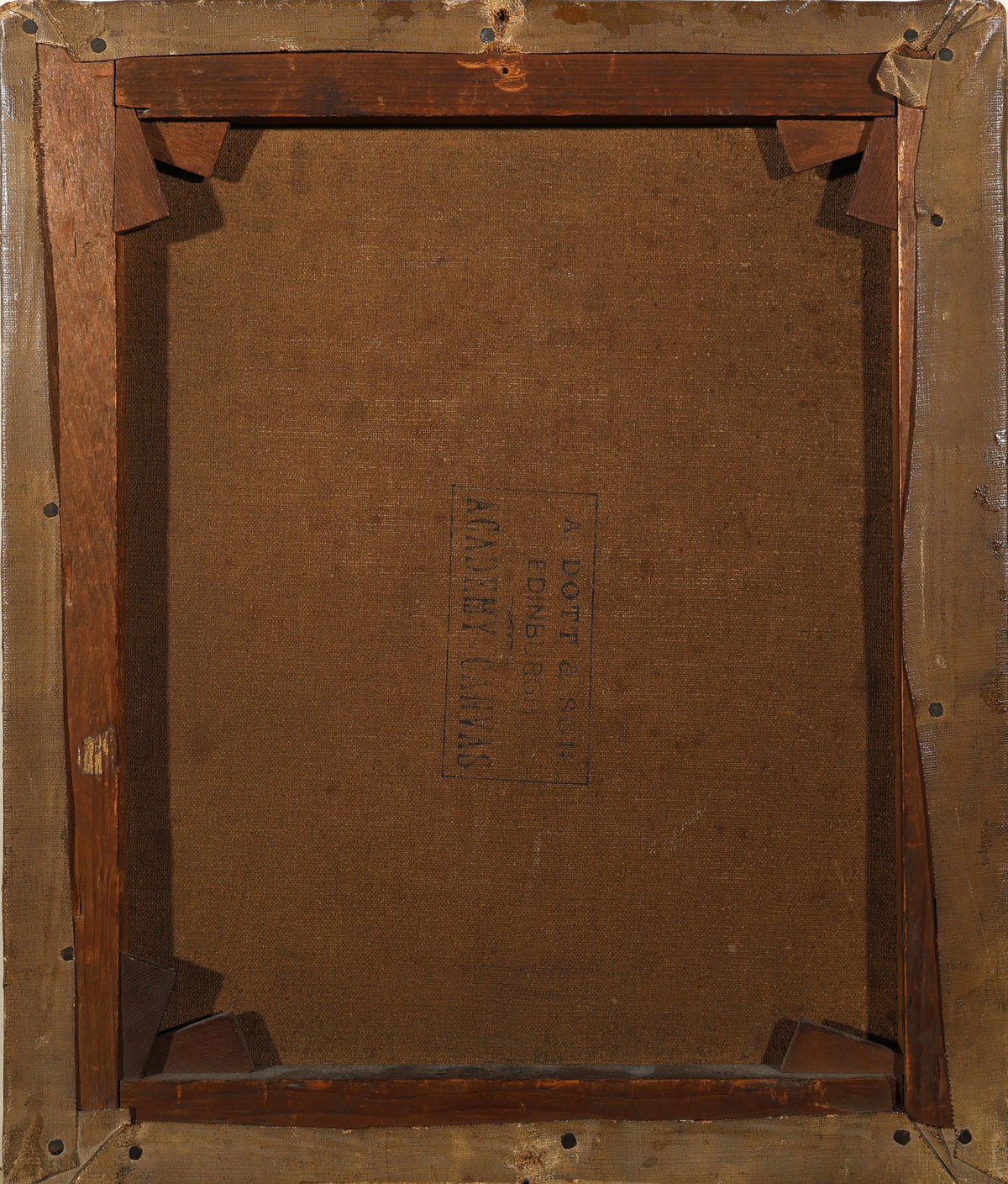
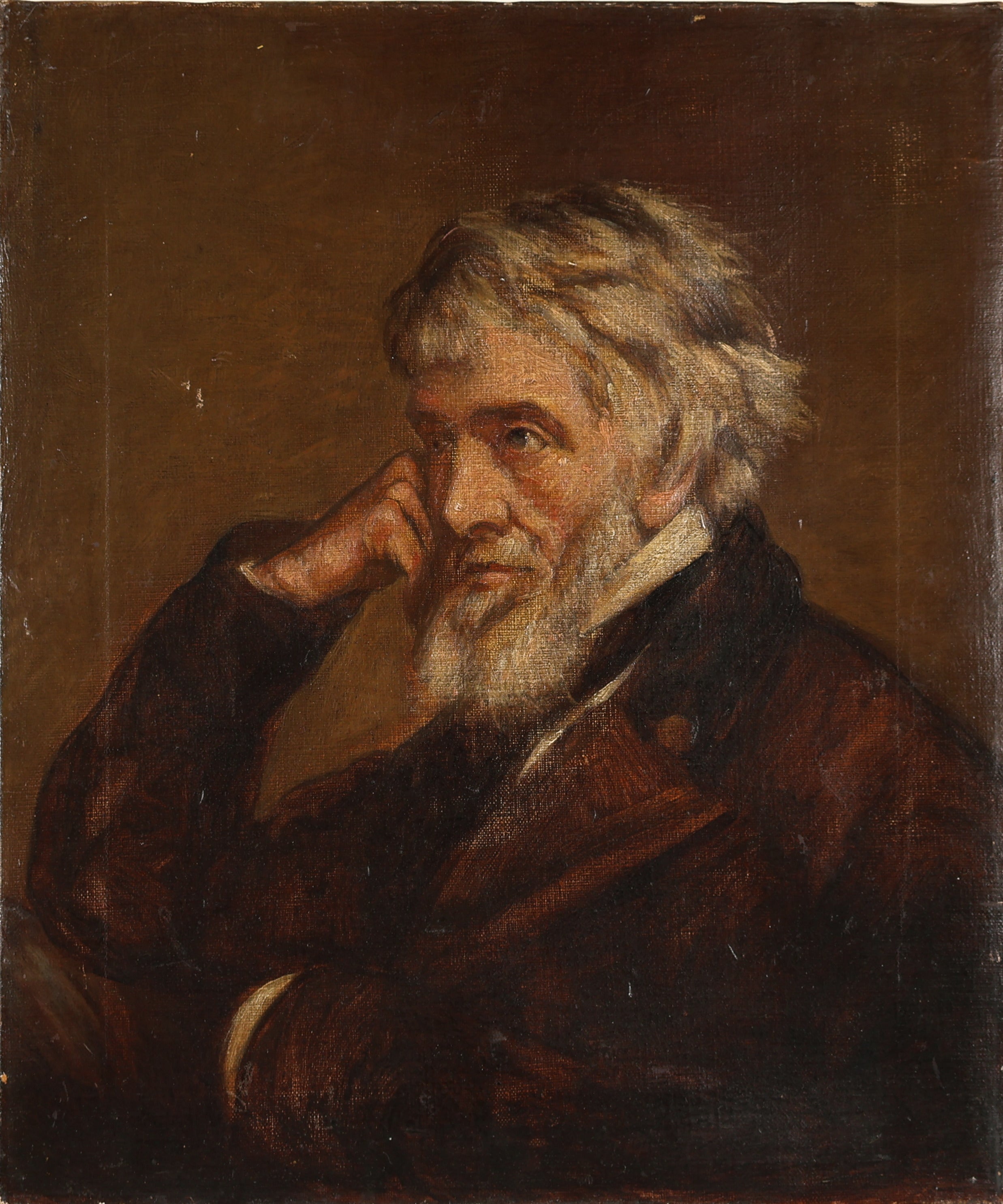
An evocative early 20th-century oil on canvas depicting the celebrated Scottish historian, essayist and philosopher Thomas Carlyle (1795–1881). Apparently unsigned, the painting is closely related to a larger late 19th-century portrait of Carlyle recorded on the art market, sharing the same distinctive pose, costume and arrangement of the sitter. The reverse bears an A. Dott & Son, Edinburgh – Academy Canvas stamp, providing useful evidence for the painting's Scottish origin and period of execution.
Carlyle is shown seated at half length, his head resting thoughtfully against his hand as he looks outward beyond the picture space. His characteristic swept white hair and long beard are picked out against a restrained brown background, while the high white collar provides a strong highlight between the sitter's face and the deep reddish-brown tones of his coat. The pose gives the portrait an introspective quality particularly suited to Carlyle's enduring image as one of the most influential literary and intellectual figures of Victorian Britain.
The composition is particularly effective in its simplicity. Carlyle occupies almost the entire canvas, with the bent arm and broad sweep of his coat forming a strong diagonal through the lower half of the picture. The hand supporting the face directs attention immediately towards the sitter's expression, while the plain background eliminates distracting detail and concentrates attention on the features, hair and beard. The limited palette of warm browns, deep reds, ochres and cream gives the work a subdued, almost monochromatic atmosphere.
The handling is strongest around the head, where comparatively loose passages of pale paint describe the swept hair and beard against the darker ground. The eyes, nose and mouth are more tightly modelled, producing a convincing sense of character despite the relatively modest dimensions of the canvas. The darker costume is treated more broadly, allowing the illuminated face and white collar to emerge strongly from the surrounding tones.
The portrait appears to derive from a recognised late 19th-century image of Carlyle. A larger Scottish School portrait dated 1880, previously recorded on the art market, is strikingly similar in composition, showing Carlyle in essentially the same pose with his cheek supported by his hand, a high white collar and dark reddish-brown coat. The present painting is considerably smaller and was executed on a later commercially prepared canvas, suggesting that it represents an early 20th-century version of this established portrait type rather than a portrait painted from life.
The reverse provides particularly useful evidence for its dating. The canvas bears the stamped mark A. Dott & Son / Edinburgh / Academy Canvas, associated with the prominent Edinburgh artists' suppliers and dealers Aitken Dott & Son. Comparable examples of this particular Academy Canvas stamp are known on Scottish paintings from the opening decades of the 20th century, supporting a likely date of approximately c.1905–30 for the present work.
Founded in Edinburgh during the 19th century, Aitken Dott & Son became an important supplier to generations of Scottish artists and subsequently developed into the gallery now known as The Scottish Gallery. The survival of the supplier's stamp on the original canvas therefore adds an interesting piece of physical evidence linking the painting with the Edinburgh artistic trade.
Thomas Carlyle was born at Ecclefechan in Dumfriesshire in 1795 and became one of the most prominent writers and thinkers of the Victorian period. His works included Sartor Resartus, The French Revolution: A History and On Heroes, Hero-Worship, and the Heroic in History. His distinctive appearance made him a particularly recognisable subject for painters, photographers and printmakers, and portraits showing the elderly Carlyle in contemplative poses became widely circulated during and after his lifetime.
The painting survives in appealingly aged condition, retaining the warm surface patina associated with an unrestored historic oil. Visible surface dirt and discoloured or aged varnish give the painting a darker appearance in places, while minor marks, abrasions and age-related wear are present across the canvas. These features contribute to its historic character, although professional surface cleaning could potentially reveal considerably greater tonal variation beneath the present patina.
A characterful Scottish portrait of one of the 19th century's most recognisable intellectual figures, with the A. Dott & Son Edinburgh canvas stamp providing particularly useful evidence for its early 20th-century date and Scottish provenance. Its compact scale, contemplative composition and visibly aged surface give the painting considerable decorative and historical appeal.
Artist: Scottish School
Title: Portrait of Thomas Carlyle
Date: Circa 1905–1930
Medium: Oil on canvas
Signed: Apparently unsigned
Unframed size: 36cm x 30cm
Framed size: Unframed
Provenance / Marks: Stamped verso A. Dott & Son, Edinburgh – Academy Canvas
Condition: Antique condition with visible age-related patina, surface dirt and general wear. The paint surface shows scattered minor marks, abrasions and areas of accumulated dirt consistent with age, together with apparent ageing or discolouration of the surface coating. The canvas remains unframed. No attempt has been made to clean or restore the painting, and professional conservation cleaning may improve its overall appearance.


New Arrivals
-
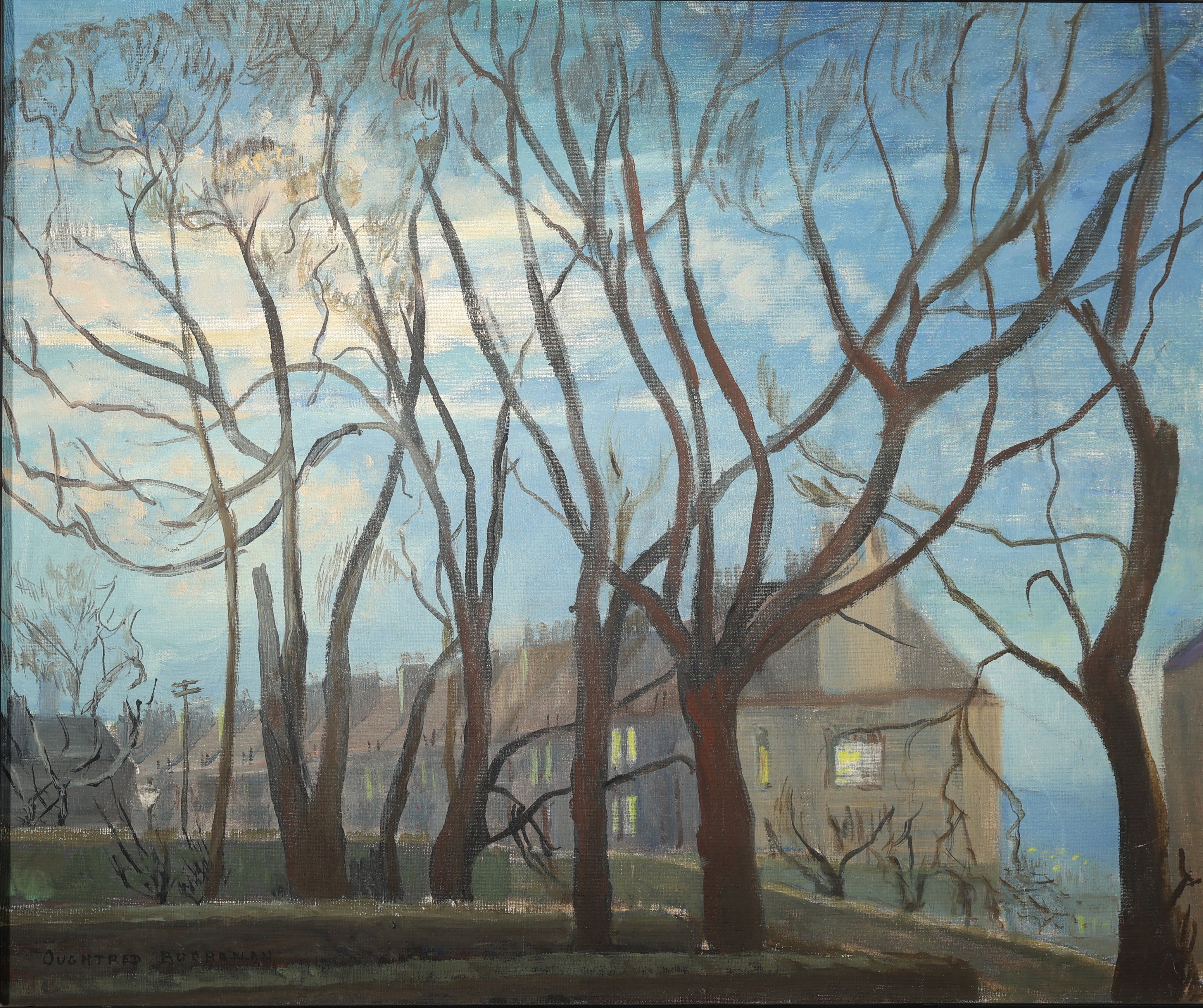
Evelyne Oughtred Buchanan – Twilight, Edinburgh
£395.00£395.00 -
Portrait of Thomas Carlyle
£295.00£295.00 -
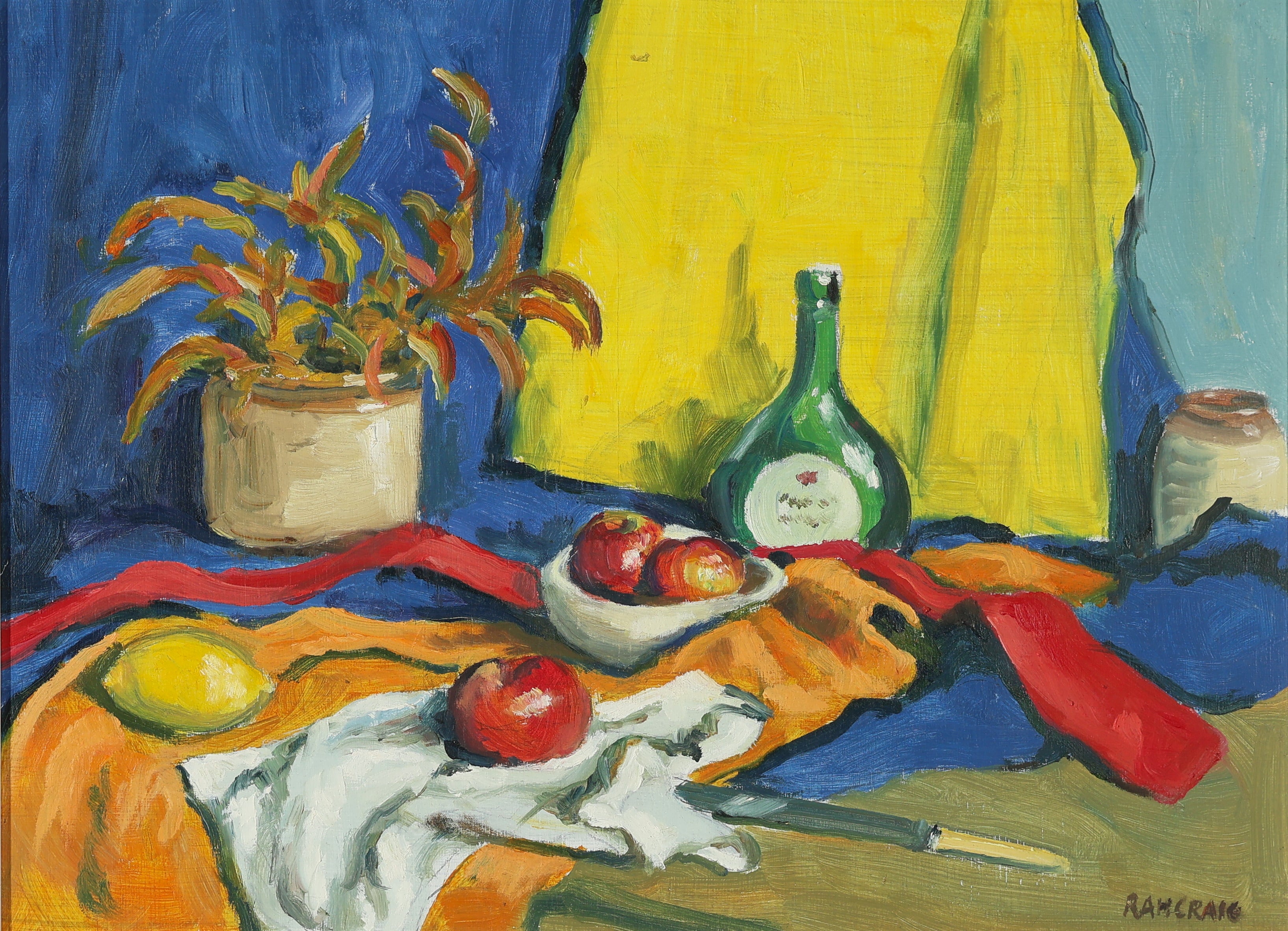
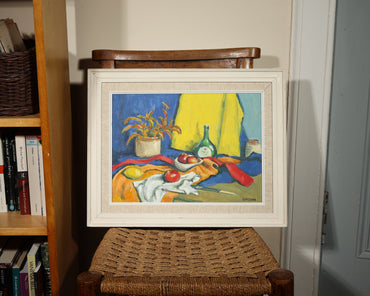
Ronald A. H. Craig – Still Life with Plant & Yellow Cloth
£295.00£295.00 -
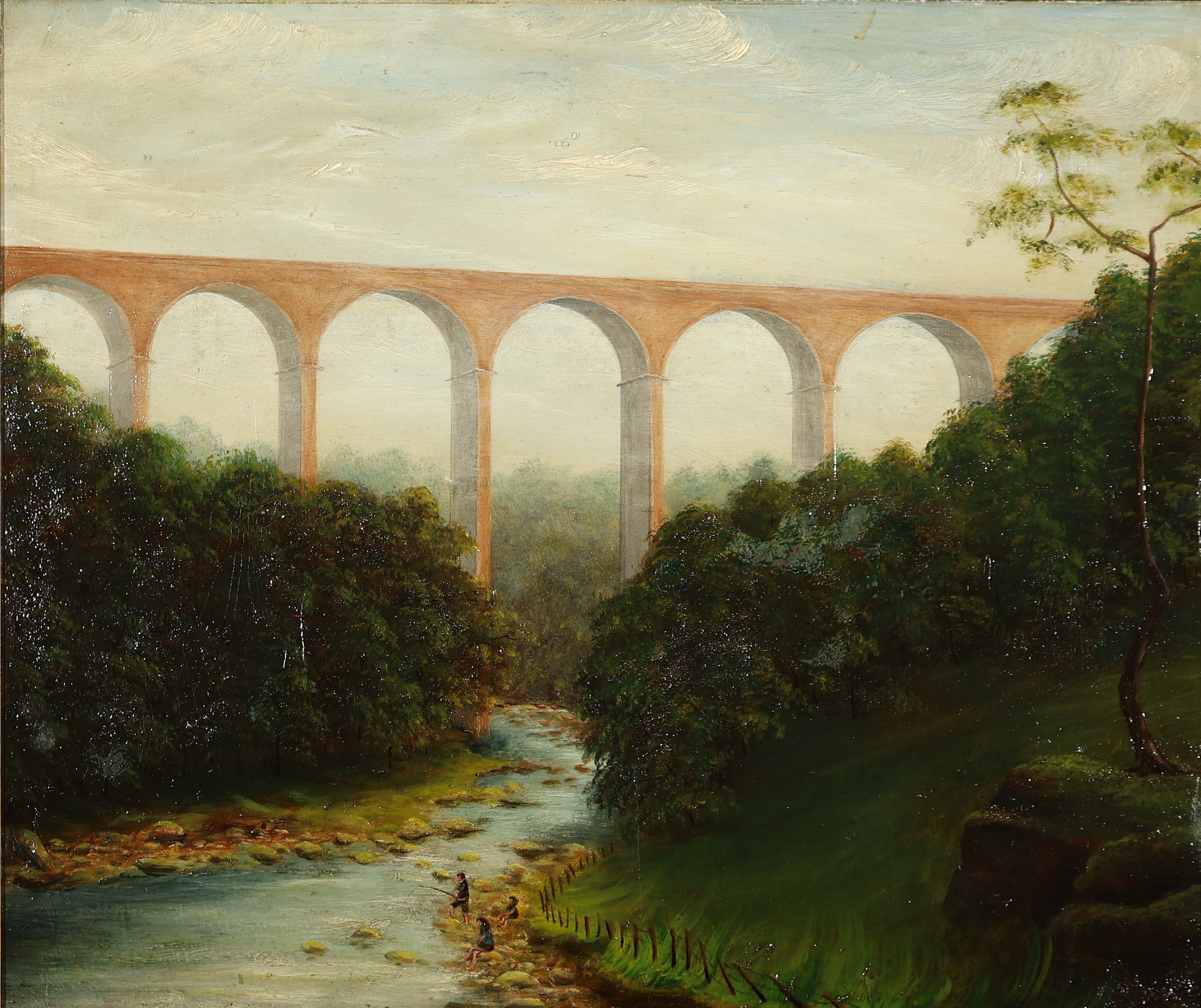
Templand Viaduct, Cumnock
£695.00£695.00 -
After William Adolphus Knell – HMS Geyser off Mount Edgcumbe
£395.00£395.00
